
To write a complete history of all the Cossack Hosts would take many volumes and, if written by the same author, many lifetimes. My short histories are to familiarize the reader with the Cossack Hosts and give you their proper place in the fabric of Cossack history. Many Hosts that are listed here no longer exist.
Around 1570, in two areas of Russia, smaller Cossack groups were coalescing into the first Cossack Hosts. In the Ukraine, along the Dnieper River, the Zaporozhian Cossack Host was forming. Futher east, in the Don Valley, and along the Don River, the Don Cossack Hosts were forming.
The Zaporozhian Cossack Host

The Zaporozhian Cossacks lived below the rapids of the Dnieper River. A literal translation of Zaporozhian is “those who live beyond the rapids” (Cossacks). The Zaporozhian Cossacks were freebooters and mercenaries, often changing sides.

The above painting, by Ilya Repin, is of the Zaporozhian Cossacks writing a letter to the Sultan of Turkey. It’s a long letter filled with vulgarities and insults. I’ll give you an approximate translation of the last line, so you can judge for yourself what the full letter contained:

“The sun is above you as it is with us, so kiss our a**.”
The Zaporozhian Cossacks were forced to accept Russian Orthodoxy as their religion. With the passing of time, they embraced it and became staunch, almost fanatic, supporters of the religion. In 1775, under Catherine the Great, the Zaporozhian Cossacks were subdued and disbanded. See the film “Taras Bulba” with Yul Brynner as a towering Taras Bulba. Though highly romanticized, it shows a fairly accurate depiction of the spartan life of the Zaporozhian Cossacks.
https://tubitv.com/movies/302259/taras-bulba
-
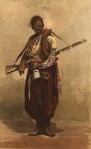
- A Type of Zaporozhian Cossack (1890) by Serhii Vasylkivsy
-

- A Zaporozhian Cossack
-

- Zaporozhian Cossack Officer of the 18th Century by Emel’ian Korneev, 1720.
-

- Portrait Of A Zaporozhian Cossack by Ilya Efimovich Repin, 1880-91
-

- “Cossacks Fighting Tatars from the Crimean Khanate” by Józef Brandt, 1890
-

- Zaporizhians by Józef Brandt, Unknown Date
-

- Victorious Zaporozhian Cossack with the head of a Tatar, 1786
-
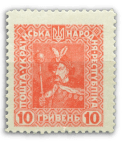
- 1918 Ukraine Zaporozhian Cossack Stamp
The Don Cossack Host
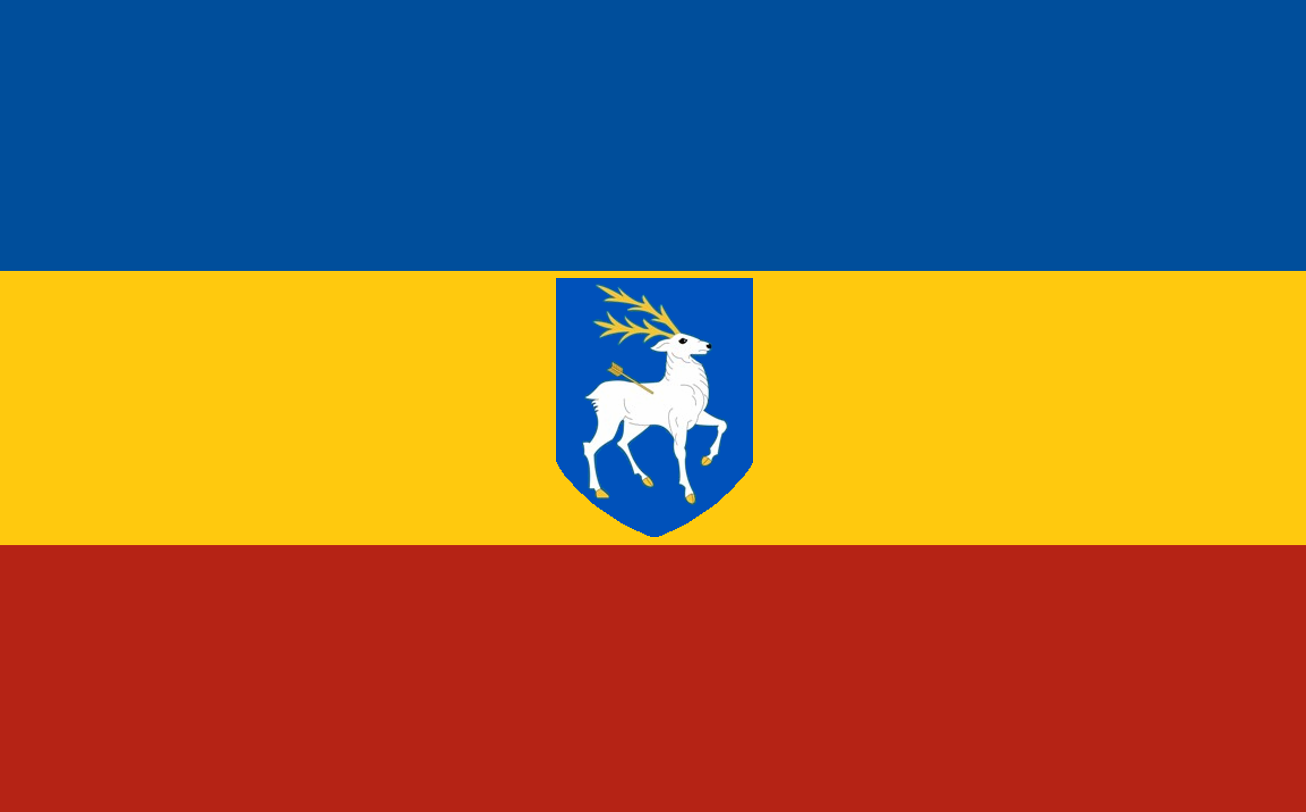 The first Don Cossack stanitza was established in 1549, and the host was established around 1570. The Don Cossacks played a significant role in many of Russia’s wars, often serving as the vanguard.
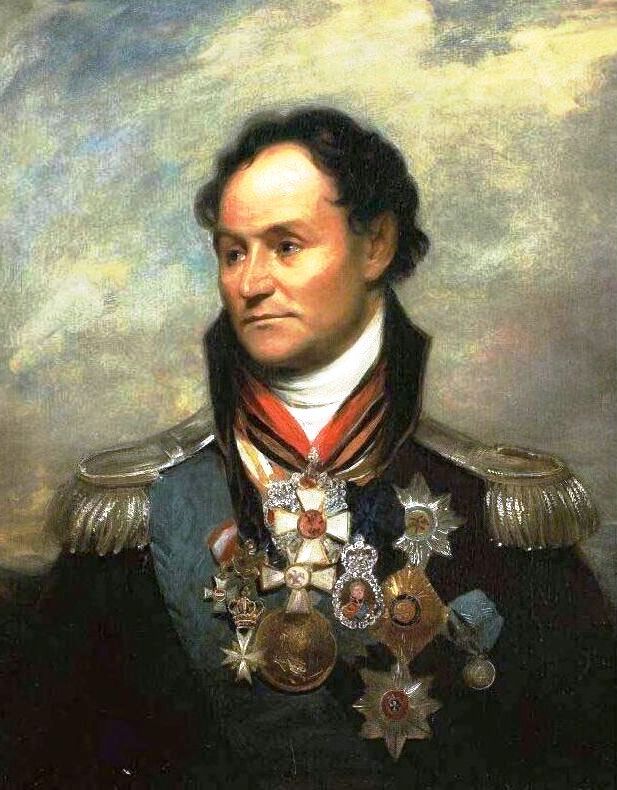
M.I. Platov by William Beechey, 1814
General Matvei Platov and his Don Cossacks were the driving force which drove Napoleon Bonaparte and his Grande Armée out of Russia and back into France, following them all the way back to Paris.
In the Revolutions of 1917-1923, the ineffectiveness of green Don Cossack troops in Saint Petersburg led to the Don Cossacks no longer being relied upon, and to the Russian Revolution. The Don Cossack Host was disbanded in 1918, with 2oo,000 to 500,000 Cossacks being deported or killed by the bolsheviks.
In the 1930s, Joseph Stalin, seeing the impending threat of nazi Germany, lifted the ban on Cossacks serving the Red Army. By 1939, several regiments of Don Cossack cavalry, in Don Cossack uniform, were numbered among the Red Army.
The prize-winning novel by Mikhail Scholokov, “Quiet Flows the Don“, is a literary masterpiece. The film of the novel, in Russian with subtitles in English, should be seen. It tracks the life and struggles through peace, war, and the revolution, leading to the final decay and destruction of the Don Cossack way of life under the heels of the communist government, with the Cossacks being thought second-class citizens and, in some cases, enemies of the state.
In 1992, the Host was reestablished. For those interested in viewing the film, we add a link to that site:
-
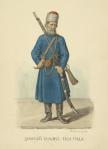
- A Cossack from Don 1821 by Fyodor Solntsev 1869
-

- Portrait of a Don Cossack by Feliks Michał Wygrzywalski, 1918
-
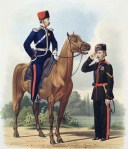
- Don Cossack regiments and artillery, Karl Piratsky, 1867
-

- Don Cossack on Horse, Aleksander Orłowski, 1810
-
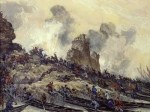
- Don Cossacks Capturing the Fortress of Azov, by Nikolai Mikhailovich Kochergin
-

- Russian Uralsk & Don Cossacks on the Attack, Johann Georg Paul Fischer, 1806
-
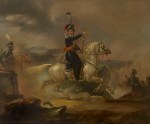
- Matvei Ivanovich Count Platov Ataman of the Cossacks by Peter Edward Stroehling, 1814
-
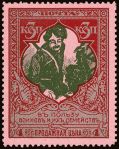
- Don Cossack Bidding Farewell Postage Stamp
The Yaik Cossack Host
The Yaik Cossack Host was established in 1571, but history traces their origins back to the end of the 14th century. High taxes and other grievances led the Yaik to joining Yemelyan Pugachev and were the driving force in the Pugachev’s Rebellion of 1733-1774. After crushing the rebellion, Catherine the Great made an attempt at eradicating the name and memory of the Yaik Cossacks from the pages of Russian history. In anger, she changed the name of the Host to the Ural Cossack Host, and changed the name of the Yaik River to the Ural River.
The Terek Cossack Host

Established in 1577 from free Cossacks from the Volga who resettled in the Caucasus along the Terek River. With the death of the last Rurik ruler in 1598, a Czar had to be chosen. The Terek Cossacks backed Ilya Muromets but, backed by the Zaporozhian and Don Cossacks in 1613, Michael Romanov was ultimately chosen to be Czar.
In 1793 the Terek Cossacks were incorporated into the Caucasian Line Cossacks. In 1860, with the exception of the Khoper and Kuban regiments, the Terek Cossacks were transferred back into the Terek Cossack Host. The Khoper and Kuban regiments, conversely, were combined with the Black Sea Cossack Host into the Kuban Cossack Host.
The Terek Cossacks fought in the Russo-Japanese War of 1904-1905 and World War I. In the Russian Civil War of 1917-1922, they were White Guard Cossacks loyal to the Czar. In 1920, the Host was disbanded. It was eventually reestablished in 1990.
-
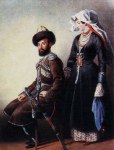
- Terek Cossack Couple, G.G. Gagarin, 19th Century
-
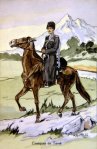
- Postcard depicting a Terek Cossack, P. Dmitroff, 1916
-

- Terek Cossack with Daughter, G.G. Gagarin, 1840
-

- Terek Cossack Postage Stamp, 2010
The Greben Cossack Host
Established in 1711 of Cossacks from the Don who settled in the northern foothills of the Caucasus. In the 16th century, they were one of the six major Cossack Host (the others being the Don, Yaik, Volga, Dnieper, and Zaporozhian Hosts). Between 1746 and 1755, the Greben Cossacks were incorporated into the Terek Cossack Host.
The Volga Cossack Host

Established in 1734 of free Cossacks that lived along the Volga River by Empress Anna Ivanovna to strengthen the Tsaritsyn Guard Line, the Volga Cossack Host was one of the six major Cossack Hosts in the 16th century. In 1770, most of the Volga Cossacks were relocated to the Terek River and incorporated into the Terek Cossack Host. In the early 19th century, the remaining Volga Cossacks were incorporated into the Astrakhan Cossack Host.
The Astrakhan Cossack Host
 Established in 1750, the Astrakhan Cossacks fought in the Patriotic War of 1812, the Russo-Turkish Wars of the 19th century, and World War I. In the Russian Civil War of 1917-1922, they were part of the white Czarist forces. They were defeated in battle at Astrakhan and disbanded in 1920. The Host was reestablished in 1990.
The Astrakhan Cossacks were unique among the Cossacks in that they lacked a single Host area, instead incorporating several distinct, clustered districts, communities, and farms along the eastern bank of the Volga River, between the cities of Chenyia Yar and Astrakhan.
The Orenburg Cossack Host
 The Host was established in 1775.
Before establishment, what would become the Orenburg Cossacks took part in Pugachev’s Rebellion of 1773-1774. They participated in the Russo-Swedish War of 1788-1790 and assisted in the Russian Conquest of Central Asia. In the Russian Civil War, they fought against the Turkestan Red Army, where many poorer Cossacks had gone over to the reds. The Orenburg Cossack Host ceased to exist in 1920, being reestablished in 1990.
The Buh Cossack Host
The Yekaterinoslav Cossack Host
 Both the Buh and Yekaterinoslav Cossack Hosts were established in 1764. In 1788, the Buh Host was combined with the Yekaterinoslav Host. These Hosts were formed of Ukrainian, Vlachs, and Bulgarians whose primary function was to guard the borders of Russia.
The Yekaterinovslav Cossack Host was disbanded in 1796, and the Buh was disbanded in 1800 but reestablished in 1803. They fought in the Russo-Turkish War of 1806-1812. During the Patriotic War of 1812, their role as partisans harassing Napoleon’s Grande Armée earned them the Order of St. George, fourth class, for bravery.
In 1817, the Buh Cossacks were combined with two Ukranian regiments into the Buh Uhlan Division, after which they faded into Russian history.
The Ural Cossack Host
 Established in 1774 of former Yaik Cossacks, they fought in the Patriotic War of 1812, the November Uprising of 1830, and the Crimean War. In the Russian Civil War of 1917-1922, they were badly beaten by the Red Army, destroyed as a fighting force, and had disbanded in 1920. The remaining Ural Cossacks fled south to Persia with many dying along the way. A few hundred migrated to Australia. The Host was reestablished in the late 1980s.
The Danubian Sich Cossack Host
 Established in 1775, the Danubian Sich Cossacks were comprised of former Zaporozhian Cossacks who settled in the Danube Delta, which at the time was the territory of the Ottoman Empire.
In 1775, the Danube Sich was destroyed, and the Danube Cossack Host disbanded.
The Black Sea Cossack Host
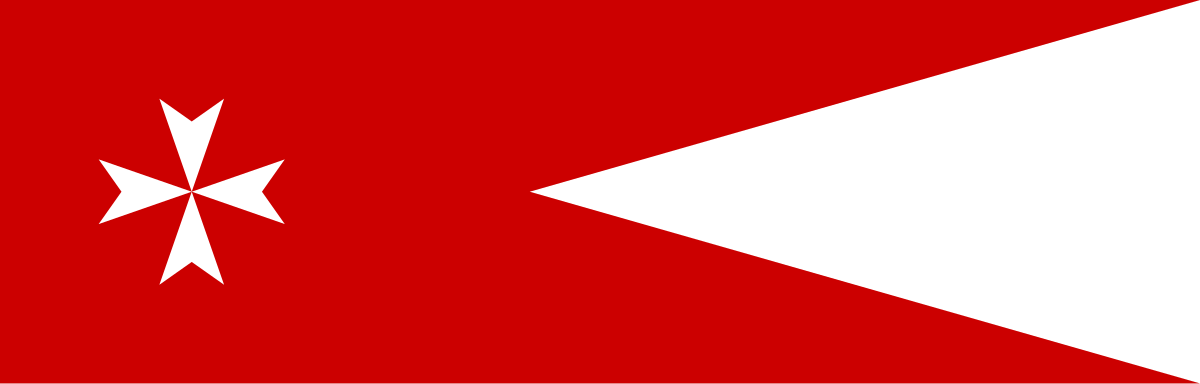 Established in 1787 of former Zaporozhian Cossacks who had been subdued and their Host disbanded by Catherine the Great. They fought in the Russo-Turkish War of 1787-1797, helped suppress the Poles in the Kosciuzsko Uprising of 1794, and fought in the Patriotic War of 1812. After the Russian conquest of the northern Caucasus in 1864, they merged into the Kuban Cossack Host.
The Bashkir Cossack Host
 Established in 1798 of Turkic people living in the Ural Mountains. During the Napoleonic Wars and the Patriotic War of 1812, the Bashkir Cossacks fought alongside the Russian Army to defend Russia from French invaders. Alongside General Matvei Platoff‘s Don Cossacks, they chased Napoleon and his Grande Armée back to France and entered Paris with the Don Cossacks. In 1919, during the Russian Civil War, they became the Baskir Autonomous Soviet Socialist Republic. During World War II they served in the Red Army during Operation Barbarossa, pushing back against the attempted invasion of the Soviet Union by nazi Germany.
The Lower Danube Burliak Cossack Host (? -ed.)
The Siberian Cossack Host
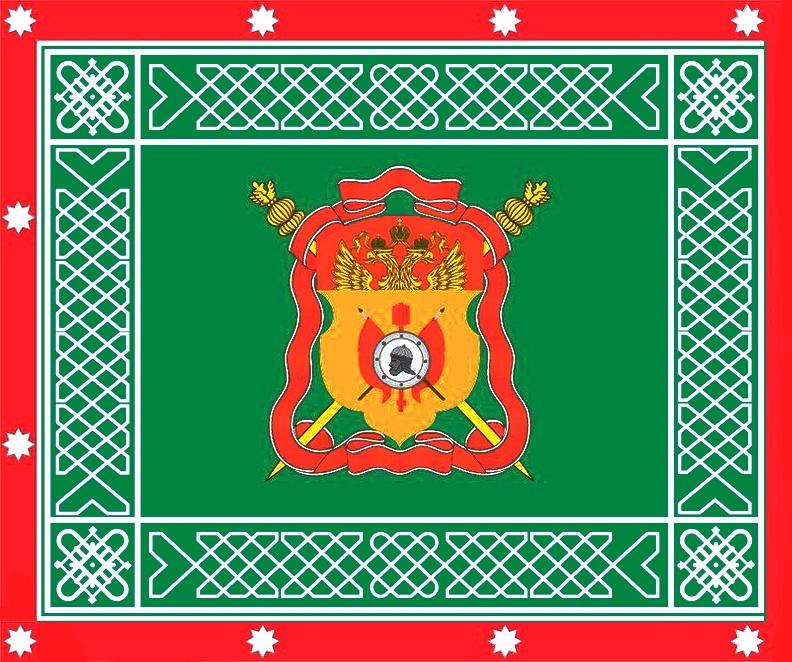
In 1582, Cossacks led by Yermak Timofeyevich conquered Siberia for Czarist Russia but the Host was not established until 1808. They served in many conflicts on behalf of Czarist Russia, including the Russo-Japanese War of 1904-1905, where they provided a large part of the cavalry. In 1919, during the Russian Revolution and Russian Civil War of 1917-1922, the Host was disbanded. It was reestablished in the late 1980s.
The Danube Cossack Host
 Established in 1828 by descendants of Zaporozhian Cossacks who had settled in the Budjak region of Bessarabia, the Danube Cossacks also included Romanians, Serbs, Bulgarians, Nekrasov Cossacks, and Romani. By 1839, Roma made up nearly 25% of the Cossacks in the Danube Cossack Host. During the Crimean War, their use of rocket artillery brought them fame and the award of Order of the Red Banner of the Georgian SSR . After losing access to the Danube River in 1856, they were renamed the Novorossiyan Cossack Host.
While the Host was disbanded in 1868 largely due to reforms made by Emperor Alexander II, most of the Danube Cossacks continued their law enforcement and customs service under local administration.
The Caucasus Line Cossack Host
Established in 1832 for the purpose of conquering the northern Caucasus, the Caucasus Line Cossack Host initially consisted of 14 regiments, the Vladikavkaz, Volga, Gorsky, Grebensky, Caucasus, Kizlyar, Labinsky, Mozdok, Stavropol, Sunzhen, Terek, Urup, and Kyoper. In 1860, the entire army was combined into the Terek Cossack Army, with the exception of the Khoper and Kuban regiments, which were instead combined with the Black Sea Regiment into the Kuban Cossack Army.
The Azov Cossack Host
 Established in 1832 on the northern shore of the Sea of Azov by former Danubian Sich Cossacks, their primary duty as the only Cossack naval force was to patrol and guard the coast of the Sea of Azov, preventing British and French navies from reaching the Don–a goal they achieved–during the Crimean War of 1853-1858. They were awarded the Order of St George, the highest award a military unit could receive. They also took part in the Russo-Circassian War of 1763-1864 and the Caucasus War of 1817-1864.
Much of the Azov Cossack Host was integrated into the Kuban Cossack Host. The remaining few faded away into history.
The Transbaikal Cossack Host

Established in 1851 in the Orek beyond Lake Baikal to patrol the Sino-Russian border, they took part in the Boxer Rebellion of 1899-1901 and the Russo-Japanese War of 1904-1908. In 1920, the host was disbanded during the Perestroika era until being reestablished in 1990.
The Amur Cossack Host

Established in 1850 from relocated Transbaikal Cossacks and headquartered in Blagoveshchensk, they patrolled the borders along the Ussuri River. They also staffed the Amur-Ussuri Flotilla, a river squadron that patrolled the Ussuri River. They took part in the Boxer Rebellion of 1899-1901 in China. In the film 55 Days at Peking, a film about the Boxer Rebellion, victorious foreign troops are seen marching in Peking at the end of the film, among them a contingent of Amur Cossacks. They took part in the Russo-Japanese War of 1904-1905 and World War I.
During the Revolution/Civil War in 1918-1922, large numbers of Amur Cossacks fought with the Red Army while smaller numbers fought on the side of the Czarist White Army.
The Amur Host was disbanded in 1918, then reestablished in 1990.
The Kuban Cossack Host
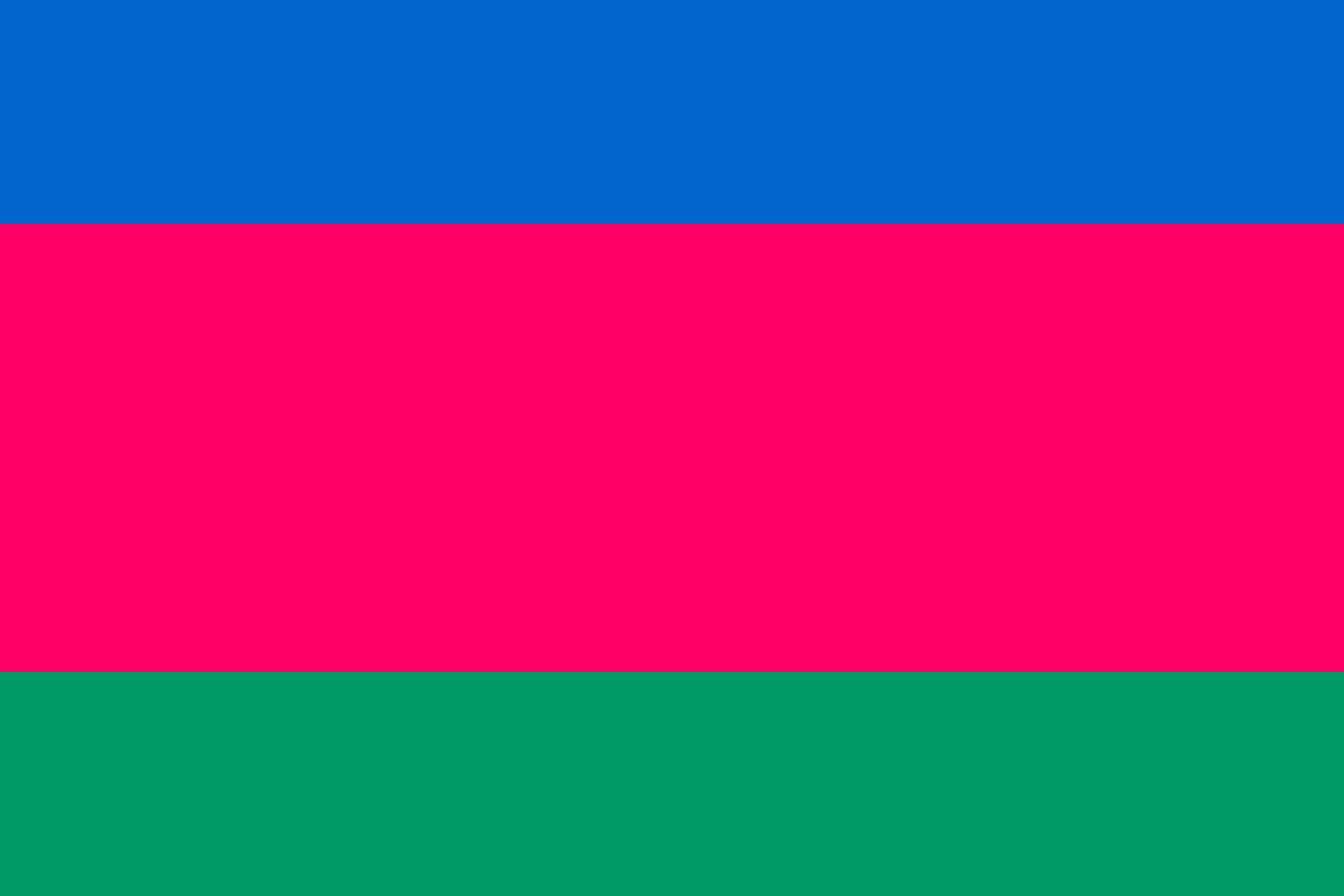
Established in 1860 by merging of the Black Sea Cossacks and a portion of the Caucasus Line Cossack Host, their heroism at the Battle of Shipka Pass in 1877 inspired the song Defense of the Shipka Pass.
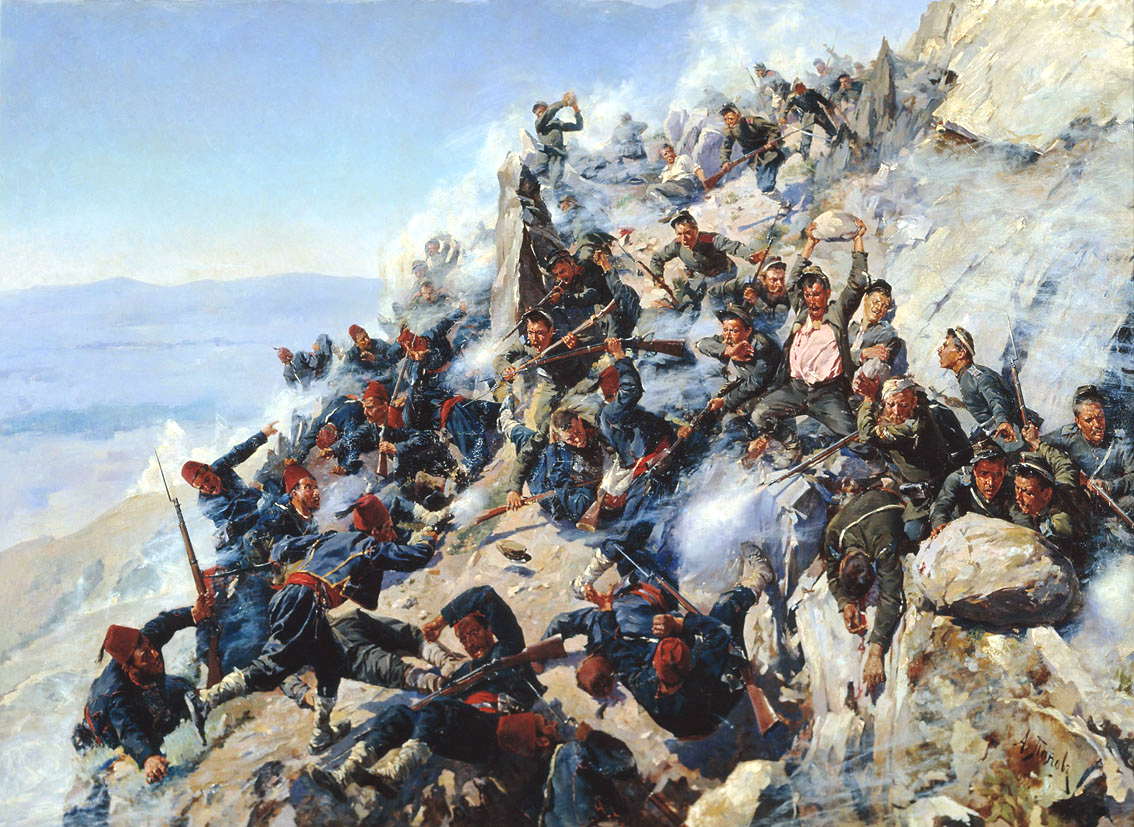
The Battle of Shipka Pass by A.N. Popov, 1893.
They distinguished themselves in the Russo-Japanese War of 1904-1905. In Word War I, they fought various fronts and during the Revolution/Civil War of 1917-1922 they fought under General A.I. Deniken. The host was disbanded in 1920.
During World War II, while some Kuban Cossacks fought with the Red Army, most—out of hatred for the Communists—fought alongside the Germans. With the defeat of Germany in 1945, Kuban Cossacks were interned by the British in Linz.
After the Revolution, it is estimated that at least 50,000 Cossacks, including their wives and children, were repatriated to the Soviet Union. Their leader Lieutenant General A.G. Shkuro and a number of ranking officers were executed on January 17, 1947, with many Cossacks receiving a sentence of ten years in the gulags—among them, Colonel I._. Babitsch (see biographies for further information)
The Russian Warriors Song Book is a two volume set of sacred songs, regimental songs, seamen songs, marching songs, Cossack songs, anthems, and historical ballads. The hundred song collection (50 in each volume) is a treasure trove of the choral music of Czarist Russia. Among the Cossacks, the above mentioned Defense of the Shipka Mountain Pass as well as Hail to Platoff and Kuban Cossack Lament can be found. Though long out of print, occasionally they can be found on the internet or in music stores that specialize in vintage music.
The host was reestablished in 1990.
Semirechyenskoe Cossack Host
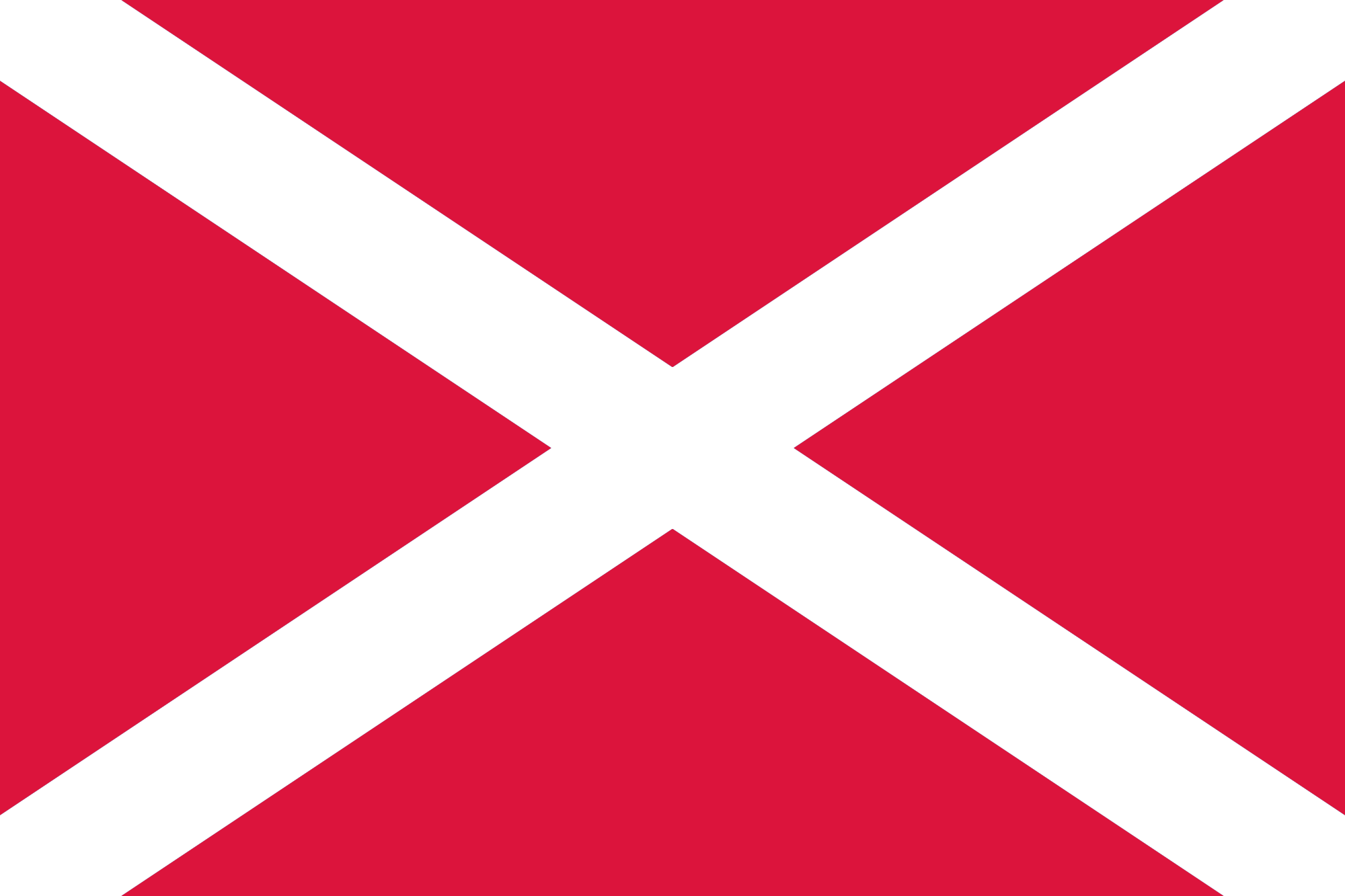
Established in 1867 by Siberian Cossacks, the Semirechyenskoe played a role in the expansion of Tsarist Russia into Kazakhstan and Kyrgyzstan. During the Russian Civil War, the Semirechyenskoe were loyal to the Czar after the defeat of the White Guard. They were disbanded in 1920, then reestablished in 1990.
The Yenisei Cossack Host
Formed in 1917, the Yenisei Cossack Host was a small force. Due to its distance of more than 2,000 miles from the war area, and having no access to the railroad, they were of little use during the Revolution. During the Civil War, they were staunch Czarist supporters and became part of the White Movement. Though small in number, they fought in Mongolia as part of the White Army. The host was disbanded in 1920 and reestablished in 1988.
The Ussuri Cossack Host
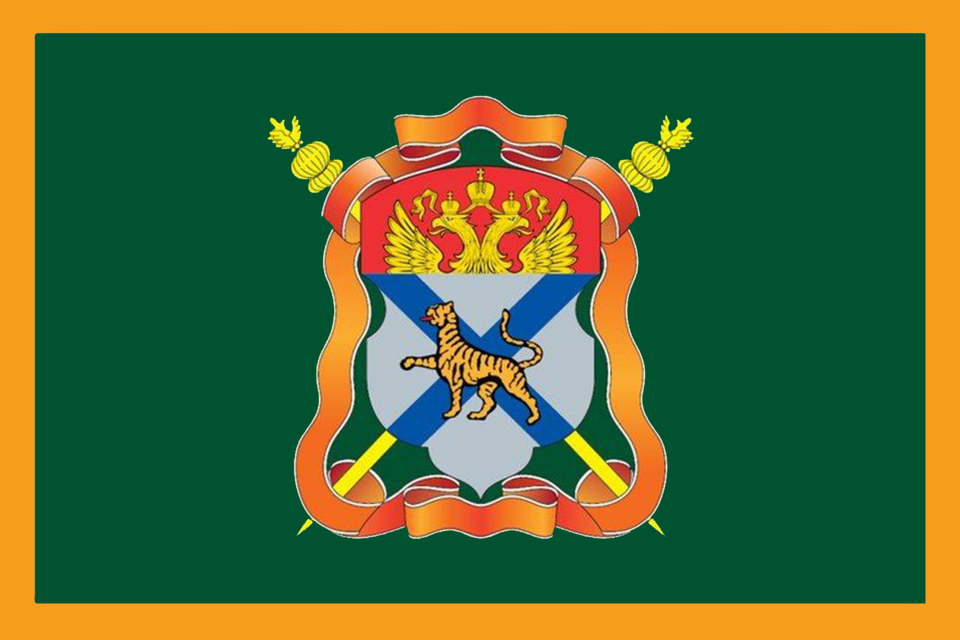
Established in 1889 along the Ussuri River of Amur, Don, and Kuban Cossacks. They were among the most proud, fighting in the Russo-Japanese War of 1904-1905, World War I, and the Russian Revolution. They were staunch followers of the Czar and fought with the White Army against the Bolshevik Red Army. They were disbanded in 1922 and reestablished in 1990.
My research has shown that as early as the 13th century, there were people called Cossacks and people who called themselves Cossacks.
Smaller Cossack Groups
Below are smaller Cossack groups that never achieved the status of Host.
COMING SOON…
 The General Platoff Don Cossack Chorus